
Fredericksburg Real Estate Assessments: What Buyers and Sellers Should Compare

An assessed value, a tax bill, and a likely sale price answer different questions. Fredericksburg buyers often encounter all three during a search, while sellers may see the assessment before deciding on an asking strategy. The useful move is not to treat one figure as the answer. It is to assemble a property-specific evidence file and understand what each record can and cannot establish.
Ron Chronister is a Fredericksburg-area real estate agent and team owner with REAL Broker serving Fredericksburg City, Stafford County, and Spotsylvania County, Virginia. This article is educational and provides a documented research process, not legal, tax, insurance, engineering, lending, surveying, or appraisal advice.
Why the official records must stay in separate lanes
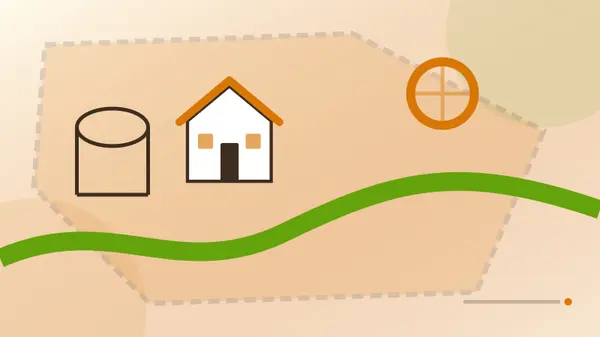
The City provides separate public resources for property records, real-estate taxes, and geographic information. That separation is a useful warning against blending administrative records into one market conclusion. A parcel record identifies the subject property and recorded characteristics. A tax page explains the local tax process. GIS adds mapped context. None of those public records, standing alone, describes current condition, buyer competition, concessions, or the terms that shaped a particular sale.
Apply the method to a realistic property question
Consider a rowhouse that shows one assessed figure while the owner describes substantial interior work completed after the record’s effective date. The assessment cannot verify finish quality, permit history, remaining useful life, or whether buyers would pay for those changes. Build three columns instead: administrative facts that match, physical facts that need inspection, and market comparisons that need adjustment. If the parcel record understates an addition or the listing overstates usable area, pause the pricing exercise and resolve the factual conflict. The resulting range should explain which evidence moved the low and high ends, not merely place the assessment beside an asking price.
A property-first verification sequence
Confirm the parcel
Match the street address to the parcel record and map before copying any number into an analysis. Similar addresses, condominium units, recent subdivisions, and mailing-address variations can create avoidable errors.
Separate assessment from tax
Record the assessed value, the applicable tax information, and the date each source reflects as different fields. This prevents a tax estimate from masquerading as a market-price conclusion.
Check recorded characteristics
Compare public square footage, lot details, property class, and improvement information with what is physically present and what listing materials state. Flag differences for verification.
Add condition and timing
Document renovation quality, deferred maintenance, layout utility, location influences, and the date of each comparable event. Administrative records rarely capture those market-facing details.
Write a range with reasons
Use a reasoned range and list the adjustments that matter instead of presenting false precision. The range should change when inspection, title, or comparable evidence changes.
How to use this before an offer or listing decision
Begin early enough that the answer can change the decision. For a buyer, that usually means identifying material questions before contingency deadlines and assigning each question to the proper reviewer: agent, inspector, surveyor, settlement provider, insurer, lender, engineer, contractor, or public authority. For a seller, it means organizing records before marketing and avoiding statements that outrun the documentation. A shared issue log should show the question, owner, due date, source, answer, and whether the issue is resolved.
Do not let a polished map or official-looking number create false confidence. Public sources are valuable because they are attributable and reproducible, not because every layer is current enough or legally controlling for every purpose. Save the page or document reviewed, note the time, and ask what would be needed to confirm a material point. If a source later changes, the earlier evidence still explains what informed the decision at that moment.
Ron’s practical local-analysis standard
For a seller, the assessment is a checkpoint, not a pricing formula. For a buyer, it is a prompt to verify the parcel, tax treatment, and physical facts before comparing recent sales. The strongest analysis reconciles public records with current property condition and truly comparable transactions. If the sources disagree, the disagreement belongs on the question list rather than being silently averaged away.
Bottom line
For a Fredericksburg City decision, start with the exact property and preserve the evidence chain. Use official local sources to locate the issue, then move material questions to the document, agency, or professional that can actually resolve them. The goal is not more data. It is a clearer decision with fewer hidden assumptions.
The decision record for “Fredericksburg Real Estate Assessments: What Buyers and Sellers Should Compare” should stay focused on its property-specific research question. Preserve the source pages and retrieval times, identify the person responsible for each unresolved item, and record the deadline that makes the answer useful. If a later source changes a material fact, retain both versions and explain why the conclusion changed. Do not turn unavailable information into an estimate. If a future article calculates a rate, median, change, or comparison, preserve the raw inputs, included records, exclusions, formula, and rounding method with the published result.
Explore more local context on the Fredericksburg City real estate page, or review Ron Chronister’s approach before planning a move.
Sources
- Property Records | Fredericksburg, VA - Official Website — retrieved 2026-08-03T22:22:45.360901Z
- Real Estate Taxes | Fredericksburg, VA - Official Website — retrieved 2026-08-03T22:22:45.360901Z
- Geographic Information System | Fredericksburg, VA - Official Website — retrieved 2026-08-03T22:22:45.360901Z
Categories
Recent Posts


GET MORE INFORMATION