
Private Roads and Road Maintenance Agreements in King George: A Buyer Checklist
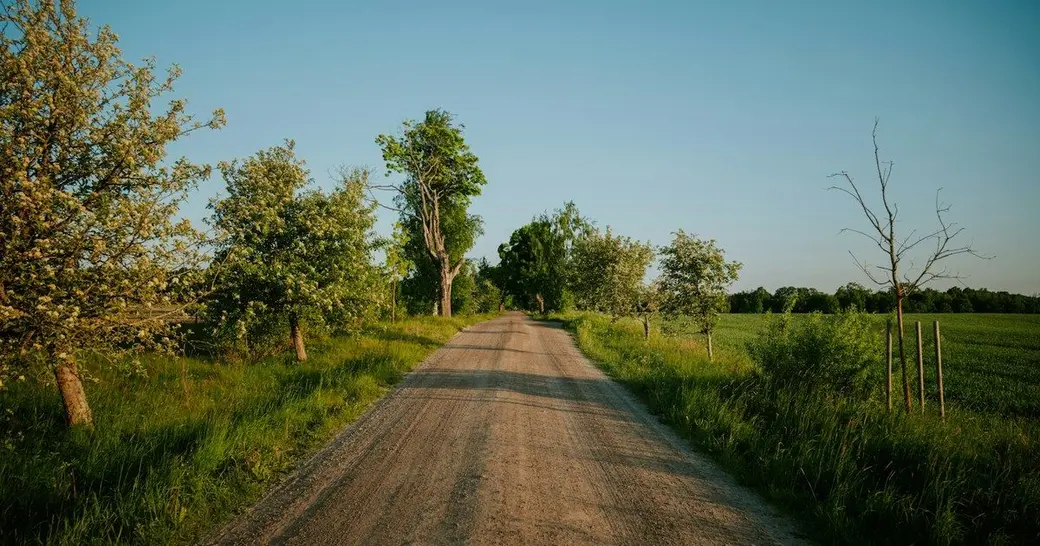
Quick answer: In King George County, a road that is not in VDOT's secondary system is a private street, and the benefited owners generally maintain it, including snow removal. Before you finalize a purchase, get the recorded plat and any road maintenance agreement, and read who pays to keep the lane from the lot out to the state-maintained road.

First confirm whether the road is public or private
A public street in King George, under the county's Zoning and Subdivision Ordinance, is one dedicated to and accepted by the Virginia Department of Transportation (King George County Code, Appendix A, § 10-3-8). VDOT says state-maintained secondary roads have route numbers of 600 and above, and it tells you to check the signs at intersections or contact the residency office if you are unsure (VDOT).
That check matters along Route 3 toward Fredericksburg, on Route 301 toward the Harry Nice Bridge, and around Dahlgren and Port Royal. A named lane off those corridors can still be private. If the listing or plat says the access is a private street, treat maintenance as a private cost until the documents say otherwise.
New major subdivisions are generally required to have public streets, with limited exceptions in the same ordinance section (King George County Code, § 10-3-8). Older plats and existing private lanes are still common, including on land that may also use a well and septic system. I covered those utility checks in a King George well and septic guide.
What the county requires in a recorded maintenance agreement
The ordinance says private streets remain private, and the benefited property owners maintain any drive or street within them (King George County Code, § 10-3-8). Street maintenance agreements are required when a private street accesses more than one parcel in a commercial or industrial district, and more than three parcels in an agricultural, residential, or planned district (King George County Code, § 10-3-8).
For those parcels, the county requires a signed and recorded maintenance agreement or covenant that outlines maintenance responsibilities from the subject property to the existing state-maintained street (King George County Code, § 10-3-8). Ask the title company or closing attorney to pull that instrument from the King George Circuit Court land records.
The ordinance was adopted on December 19, 2023, as Ordinance Amendment Z-2023-00151, effective January 1, 2024 (King George County resolution). Read the live Municode text, not an older draft, if a seller hands you a photocopy.
What the plat note is supposed to say
If private streets are in the subdivision, the ordinance requires this note on the plat: the street serving the lot is private; its maintenance, including snow removal, is not a public responsibility; it is not eligible for acceptance into the State Highway System until it is constructed and otherwise complies with all VDOT requirements for adding subdivision streets, current at the time of the request; and any costs to make the street eligible are the landowner's responsibility (King George County Code, Article X).
That note is a warning, not a maintenance plan. It does not say how often gravel is added, how snow is plowed, or how costs are split; those details belong in the recorded agreement or covenants. If the plat has the note and no agreement can be found, treat that as a gap to resolve before you remove a contingency.
For new private streets that will not go into VDOT's system, the ordinance also sets construction standards, including pavement not less than 25 feet wide in an easement not less than 50 feet wide, and an engineer's certification that the street was built to the ordinance (King George County Code, § 10-3-8). Do not assume an older lane already meets those standards or qualifies for state acceptance.
Rural addition is limited, and it is not a promise
For a road that is not state-maintained, VDOT points to a rural addition program under Code of Virginia § 33.2-335, and it says a qualifying county's board of supervisors has limited authority to improve privately maintained public roads if they meet prescribed tests (VDOT).
VDOT's general eligibility list for older, privately maintained public roads includes public use for at least 20 years, all-day public access, a right-of-way wide enough to dedicate (usually 40 feet), a connection to a VDOT- or locality-maintained road, and a minimum of three occupied homes, among other tests (VDOT). The board of supervisors must formally approve the addition and identify funding, and VDOT notes that state funds are very limited (VDOT).
I will not tell you a particular King George lane will be taken into the secondary system. That is a county and VDOT decision, and the plat note already says landowners pay any work required to become eligible (King George County Code, Article X). If a seller mentions rural addition, ask for a board action or a VDOT review, not a verbal hope.
What to build into the offer
Have your agent and attorney treat the access as a document review, the same way you would review permits on a custom-home lot in King George. Collect the recorded plat, the road maintenance agreement or covenant, any easement to the state-maintained road, and a title commitment that lists those instruments. Read how costs are shared, whether unpaid shares become a lien, who can authorize work, and whether the agreement runs with the land.
FAQ
How can I tell if a King George road is privately maintained?
Start with the recorded plat and the county GIS or parcel map, then look for a VDOT route number of 600 or higher on the signs, which VDOT uses to mark state-maintained secondary roads (VDOT). The county ordinance defines a public street as one dedicated to and accepted by VDOT (King George County Code, § 10-3-8).
Does every private street in King George have a recorded maintenance agreement?
The ordinance requires a signed, recorded agreement or covenant when a private street accesses more than one parcel in a commercial or industrial district, or more than three parcels in an agricultural, residential, or planned district (King George County Code, § 10-3-8). If no agreement appears in the land records, raise it before you finalize the contract.
If the plat says the road is private, will VDOT take it over later?
Not automatically. The required plat note says the street is not eligible for the State Highway System until it meets VDOT's requirements current at the time of the request, and that the landowners pay those costs (King George County Code, Article X). Rural addition under § 33.2-335 is a limited process that starts with the board of supervisors (VDOT).
Who is responsible for snow removal on a King George private road?
The required plat language states that maintenance, including snow removal, is not a public responsibility (King George County Code, Article X). Look to the recorded maintenance agreement, if there is one, for how that work is arranged and paid for.
Buying in King George and the access is a private road?
If you want the plat, the maintenance agreement, and the offer language reviewed on a specific King George property, call or text Ron Chronister, REAL Broker, at (540) 300-4967. You can also start from the King George area page or a selling consultation.
Categories
Recent Posts


GET MORE INFORMATION